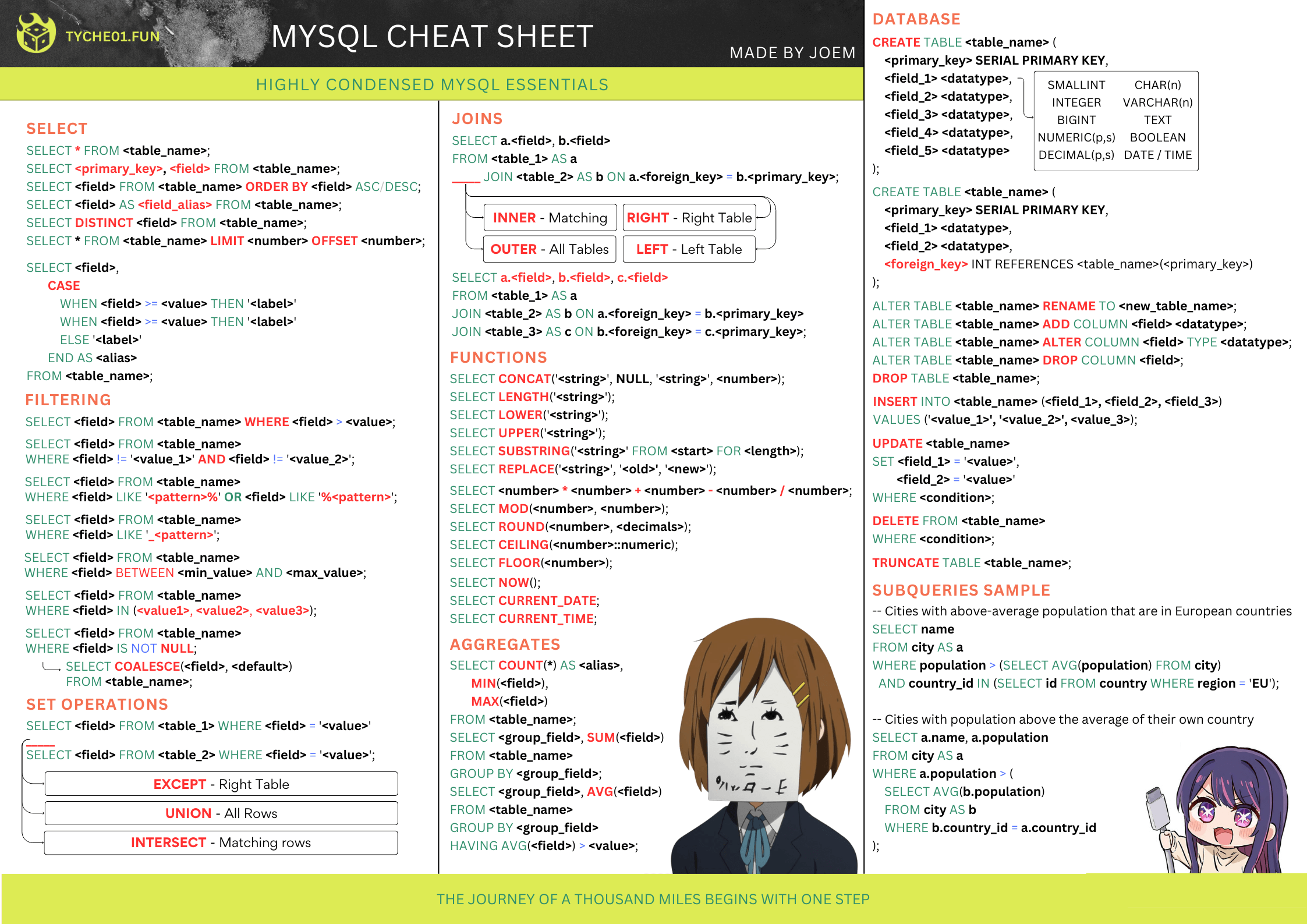
When I first started building my system, I began working with SQL. My initial impression was that it felt very simple, but at the same time surprisingly complex.
At a surface level, SQL appears straightforward. Many of its commands read almost like plain English. Statements like SELECT, INSERT, UPDATE, and DELETE make it fairly clear what they are meant to do. Because of that, learning the basics often feels manageable just by reading documentation or examples.
However, the deeper I went into it, the more I started noticing features that made me think: “Oh, you can actually do that?”
SQL has many small but powerful capabilities. One example that stood out to me was the ability to use transactions. With transactions, you can perform several operations and only finalize them if everything works correctly. If something goes wrong, you can simply roll everything back and undo the changes. This makes experimentation and mistake recovery much safer when working with databases.
Moments like that made SQL feel both elegant and surprisingly powerful.
Looking at the structure of SQL commands also makes the language feel approachable. The syntax is often very clear and predictable. Because of this, it sometimes feels possible to understand many queries simply by reading them carefully.
Of course, learning SQL isn't completely effortless. There are times when I still mix up syntax or forget certain query structures. But most of the time, that comes down to familiarity rather than the language itself being overly complicated.
In many ways, SQL sits in an interesting position: it is simple enough to pick up quickly, yet complex enough to keep revealing new features the longer you use it.
For now, it’s one of those tools that keeps making me realize how much more there is to learn, even when the basics seem straightforward.